FOR RESIDENTIAL & COMMERCIAL
Roof Coating Services for Residential & Commercial Properties in the Chicago suburbs
A roof coating is one of the most cost-effective ways to extend the life of an existing roof. Applied directly over your current roofing system, the right coating seals leaks, improves waterproofing, reduces energy costs, and can add 10 to 15 years of life without the cost or disruption of a full tear-off. Lakeland applies roof coatings to both residential and commercial properties across the Chicago suburbs and Southern Wisconsin.

-
 Certified Applicator, Commercial Innovations Roofing & Waterproofing Systems
-
 50-Year Material Warranty · 10-Year Workmanship Warranty
-
 5.0 across 240+ reviews
Commercial Roof Coatings
Commercial roofs take a harder beating than residential ones. Constant foot traffic, HVAC equipment, ponding water, and wide temperature swings accelerate deterioration. A roof coating applied at the right time in a commercial roof’s life cycle can defer a full replacement by a decade or more, protecting your capital budget while keeping your building weather-tight.
TPO, EPDM, modified bitumen, and built-up roofing systems are all candidates for coating when the underlying membrane is structurally intact. We assess the deck and membrane condition before recommending a coating, and we’ll tell you clearly if the roof has passed the point where coating makes sense.
Metal commercial roofs are excellent candidates for elastomeric and silicone coatings. Coating stops rust progression, seals fastener penetrations and seam splits, and dramatically improves thermal performance. A coated metal roof can look and perform like new for another 15 to 20 years.
A full commercial tear-off is expensive, disruptive, and generates significant waste. If your roof has 30 to 50% of its useful life remaining and the deck is in good condition, a coating is almost always the better investment. We provide a written assessment that compares the cost and expected lifespan of coating versus replacement so you can make the right decision for your building and budget.
Flat & Low-Slope Roof Coating
TPO, EPDM, modified bitumen, and built-up roofing systems are all candidates for coating when the underlying membrane is structurally intact. We assess the deck and membrane condition before recommending a coating, and we’ll tell you clearly if the roof has passed the point where coating makes sense.
Metal Commercial Roof Coating
Metal commercial roofs are excellent candidates for elastomeric and silicone coatings. Coating stops rust progression, seals fastener penetrations and seam splits, and dramatically improves thermal performance. A coated metal roof can look and perform like new for another 15 to 20 years.
Coating as an Alternative to Replacement
A full commercial tear-off is expensive, disruptive, and generates significant waste. If your roof has 30 to 50% of its useful life remaining and the deck is in good condition, a coating is almost always the better investment. We provide a written assessment that compares the cost and expected lifespan of coating versus replacement so you can make the right decision for your building and budget.
Residential Roof Coatings
Roof coatings are not just for commercial buildings. Homeowners with metal roofs, flat garage roofs, or low-slope sections on their home can benefit from the same protection and cost savings.
TPO, EPDM, modified bitumen, and built-up roofing systems are all candidates for coating when the underlying membrane is structurally intact. We assess the deck and membrane condition before recommending a coating, and we’ll tell you clearly if the roof has passed the point where coating makes sense.
Metal commercial roofs are excellent candidates for elastomeric and silicone coatings. Coating stops rust progression, seals fastener penetrations and seam splits, and dramatically improves thermal performance. A coated metal roof can look and perform like new for another 15 to 20 years.
Metal Roofing Coatings
TPO, EPDM, modified bitumen, and built-up roofing systems are all candidates for coating when the underlying membrane is structurally intact. We assess the deck and membrane condition before recommending a coating, and we’ll tell you clearly if the roof has passed the point where coating makes sense.
Low-Slope Sections, Garages & Additions
Metal commercial roofs are excellent candidates for elastomeric and silicone coatings. Coating stops rust progression, seals fastener penetrations and seam splits, and dramatically improves thermal performance. A coated metal roof can look and perform like new for another 15 to 20 years.
Types of Roof Coatings We Apply
The right coating depends on your roof type, slope, drainage, and performance goals. Here is a breakdown of the systems we work with.
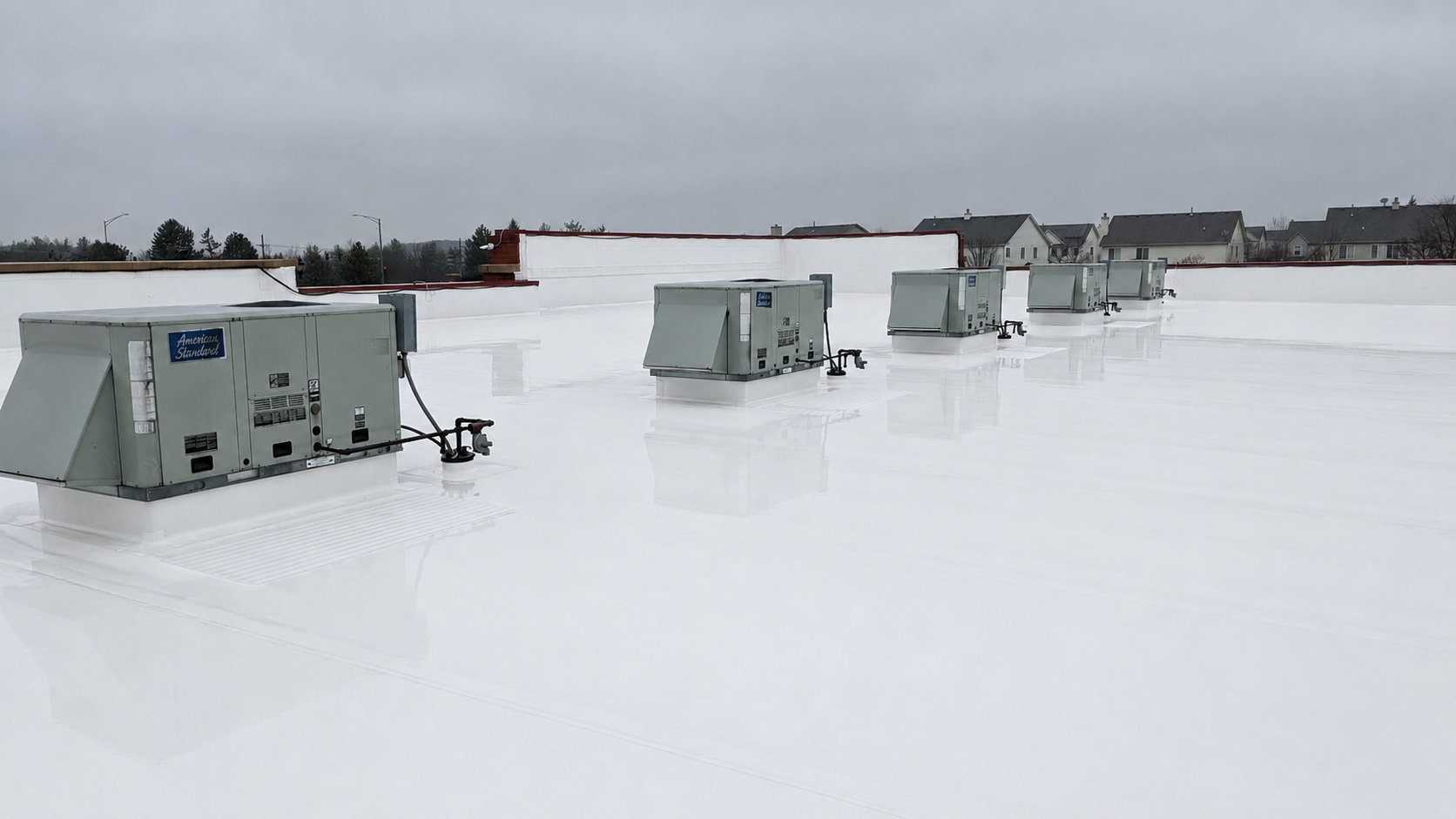
Silicone Roof Coating
- Silicone is the best-performing coating for roofs with ponding water.
- It does not absorb water, does not erode under UV exposure, and maintains its flexibility in extreme cold.
- It is the preferred system for flat commercial roofs with drainage challenges. Silicone coatings are typically white or light grey, providing strong solar reflectivity and energy savings.
Acrylic Roof Coating
- Acrylic coatings are water-based, low-odor, and highly reflective.
- They are well-suited for sloped roofs, metal surfaces, and flat roofs with adequate drainage.
- Acrylic is a cost-effective option when ponding water is not a concern.
- It performs best in the Chicago suburbs’ warm months but requires good drainage because standing water will erode it over time.
Elastomeric Roof Coating
- Elastomeric coatings stretch and contract with temperature changes, making them a strong fit for metal roofs that expand and contract through the Chicago suburbs’ temperature extremes.
- They provide excellent waterproofing, UV resistance, and energy reflectivity.
- Available in white and tinted formulations.PVC seams are heat-welded like TPO, producing a continuous waterproof membrane even at penetrations and field seams.
Polyurethane Roof Coating
- Polyurethane is the most impact-resistant coating available. It handles foot traffic, hail, and mechanical impact better than silicone or acrylic.
- Aromatic polyurethane is used as a base coat for impact protection.
- Aliphatic polyurethane is used as a top coat where UV stability and color retention are priorities. Well-suited for roofs with regular maintenance foot traffic.
Trusted by 1000+ Property Owners Across Illinois & Wisconsin
5.0 across 240+ reviews